
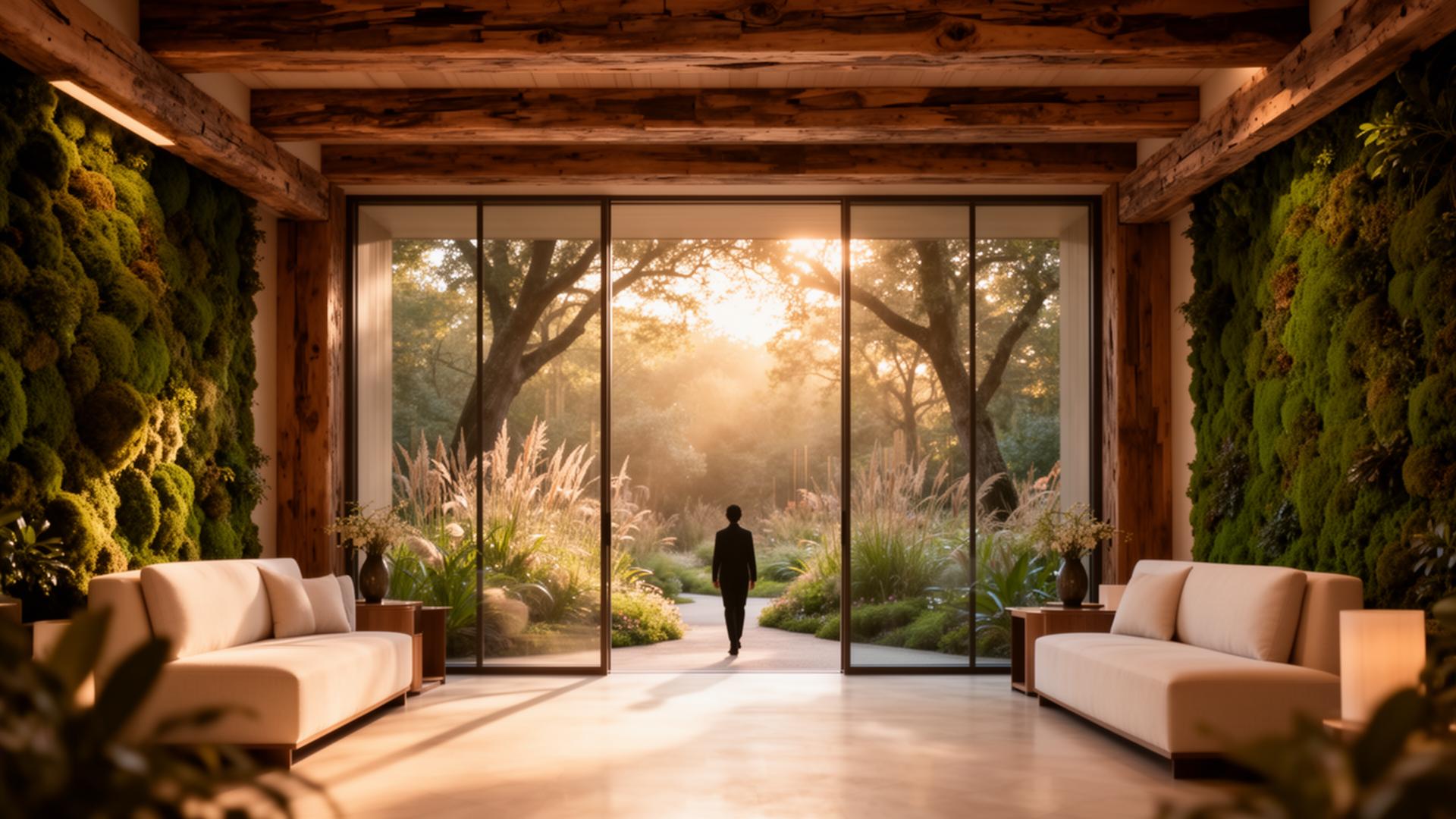
1 Hotels Mission Membership
    All Innovations
    Innovation.
    Travel
    Business ModelHotels & Accommodation✦ Established

    1 Hotels Mission Membership

    1 Hotels · United States · 2025

    "A luxury loyalty program that replaces points with planted trees and 1% donations to environmental nonprofits, doubling membership to 200,000+ in five months."
    Year
    2025
    Region
    Global
    Country
    United States
    Sector
    Hotels & Accommodation
    Type
    Business Model
    Technology
    Cloud/SaaS
    Stage
    Established
    ◈ Overview

    Purpose-driven luxury loyalty program that ditches points in favour of environmental givebacks and Salesforce-powered hyper-personalisation.

    ◈ In Depth

    Mission Membership is Starwood Hotels' attempt to redefine what a luxury loyalty programme rewards. Instead of accumulating points toward free nights, members are recognised through environmental impact and curated personalisation. Joining triggers a tree planting through the Arbor Day Foundation, and 1% of every qualifying stay is donated to a nonprofit the member selects from three environmental partners. A bespoke Salesforce data platform records preferences and stay history to deliver personalised on-property experiences, room set-up, and bespoke perks. The brand soft-launched in July 2025 and formally announced in December 2025; by November it had more than doubled enrolment to over 200,000 members. The model reflects founder Barry Sternlicht's view that eco-conscious luxury guests value identity and impact more than free rooms, and it draws on his earlier work creating Starwood Preferred Guest in the 1990s.

    ◈ Framework

    Innovation Impact Canvas

    An 8-dimension case study framework tracing the full lifecycle of innovation, from the problem that created the need, to the mechanism of change, to the lessons available for replication.

    01
    The Gap
    What specific friction, inequity, or missed opportunity in travel/tourism prompted this?
    Luxury hotel loyalty had calcified around points-for-free-nights, a currency that creates balance-sheet liability for operators and feels misaligned for eco-conscious guests who already pay premium rates and care more about identity, access, and impact than discounted rooms.
    02
    The Trigger
    What change in technology, behaviour, regulation, or competition made this innovation possible or necessary NOW?
    By 2025, sustainability had moved from marketing claim to purchase driver in luxury hospitality, Salesforce-grade CRM made hyper-personalisation operationally feasible, and 1 Hotels' brand promise of nature-led luxury made a points programme feel off-brand. Barry Sternlicht used his return to the Starwood Hotels name as the moment to redesign loyalty from first principles.
    03
    The Breakthrough
    What is the core innovation - what changed, and why is it fundamentally different from what existed before?
    A points-free luxury loyalty programme that rewards members with environmental impact and personalised service rather than redeemable currency, turning every stay into a measurable contribution to nature.
    04
    How It Works
    What technology, process, business model, or service design architecture enables this?
    1 Hotels built Mission Membership around three components. First, sign-up triggers a tree planted through the Arbor Day Foundation, giving members an immediate tangible act tied to the brand. Second, 1% of every qualifying stay is donated to one of three environmental nonprofits the member chooses, replacing points accrual with directed giving. Third, a custom Salesforce platform captures preferences, stay history, and behavioural cues to deliver hyper-personalised service on property, including upgrades, curated experiences, and bespoke arrival set-ups. The result is a programme where status is expressed through impact and recognition rather than discount currency.
    05
    The Impact
    What measurable, quantified outcomes has this produced?
    Membership more than doubled to over 200,000 members in roughly five months after the July 2025 soft launch. Every enrolled member generates a tree planting and a recurring 1% charitable contribution per stay. The programme rolled out across the global 1 Hotels portfolio and was formally unveiled in December 2025 as a category reset for luxury loyalty.
    06
    Friction & Risk
    What challenged implementation? What could go wrong or limit adoption?
    Removing the points liability protects margin but trades a familiar redemption hook that some guests still expect, so the programme depends on continued resonance of the sustainability narrative and credible reporting of donations and tree counts. Greenwashing scrutiny is a real exposure, the CRM-led personalisation must consistently feel premium rather than surveillance, and competitors with larger global footprints may copy the structure while keeping points, blunting differentiation.
    07
    The Ripple Effect
    What does this unlock, influence, or make possible beyond its immediate context?
    Mission Membership reframes the question luxury operators ask about loyalty, from "how many points should we award" to "what should a stay stand for". Peers in nature-led and wellness hospitality are now under pressure to articulate a comparable purpose-led programme, and the move accelerates the industry shift toward CRM-based recognition over points liability.
    08
    The Playbook
    What would another organization need to replicate or adapt this?
    Define a brand-defining cause your guests already buy into, replace points accrual with a transparent per-stay contribution, and back personalisation with a CRM platform that can act on guest data in real time. Let members direct where their impact goes, publish the numbers, and use status tiers to deepen recognition rather than discounting.
    ◈ Replicability

    Replicability Score

    An AI-evaluated measure of how easily and relevantly this innovation can be replicated by other tourism & travel sectors.

    7
    / 100
    Hard to Replicate

    The mechanism is structurally simple and portable across luxury and lifestyle brands, but credibility depends on a genuine brand-cause fit and CRM maturity that most mid-tier operators lack.

    Relevant for these sectors
    Hotels & AccommodationCruise & MaritimeWellness & Health Tourism
    ◈ Replicate

    How organizations can replicate this

    Key principles and transferable insights for adapting this innovation to other contexts.

    Anchor the programme to a brand-defining cause your guests already care about, replace points liability with a measurable charitable contribution per stay, and invest in a CRM platform that turns guest data into personalised service rather than discounts. Communicate impact transparently and let members choose where their contribution goes.

    ◈ Score

    Innovation Score

    Editorial assessment across 8 weighted dimensions. Scores represent our judgment based on publicly available evidence, industry coverage, and documented outcomes. Scores are revised as new evidence emerges.

    Problem–Solution Fit (20%)8.4
    Commercial Impact (18%)7.8
    Experience Transformation (16%)8.2
    Scalability (14%)7
    Sustainability Alignment (12%)9.1
    Technology Sophistication (10%)7.2
    Industry Influence (6%)8.3
    Evidence Quality (4%)7.6
    ◈ Innovation Score
    Problem–Solution Fit (20%)8.4
    Commercial Impact (18%)7.8
    Experience Transformation (16%)8.2
    Scalability (14%)7
    Sustainability Alignment (12%)9.1
    Technology Sophistication (10%)7.2
    Industry Influence (6%)8.3
    Evidence Quality (4%)7.6
    Weighted Overall Score 8/100

    Full Analysis is available to Pro members. Upgrade to Pro.

    ◈ Details
    LoyaltySustainabilityLuxuryPersonalisationHotels

    Share this innovation

    Innovation.
    Travel
    Part of the Travel Intelligence Network

    © 2026 Innovation.Travel