
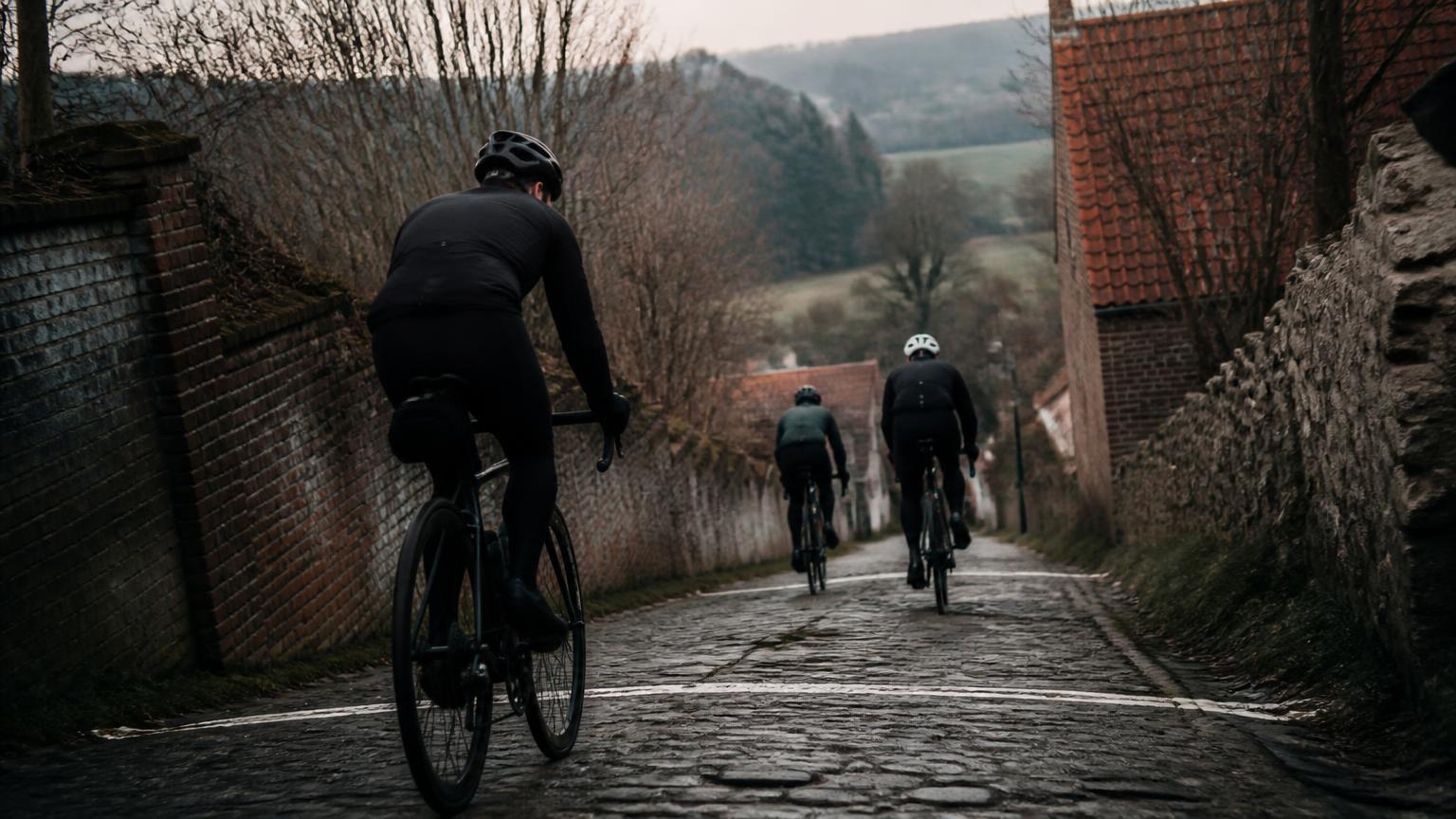
The Flandrien Challenge: Strava Segments Turned Into Stone
    All Innovations
    Innovation.
    Travel
    Service DesignDestination Marketing✦ Established

    The Flandrien Challenge: Strava Segments Turned Into Stone

    Cycling in Flanders (VISITFLANDERS) with Strava · Belgium · 2019

    "Amateur cyclists who ride 59 legendary Flemish climbs and cobbled sectors within 72 hours get their Strava name engraved in stone on a public Wall of Fame in Oudenaarde."
    Year
    2019
    Region
    Europe
    Country
    Belgium
    Sector
    Destination Marketing
    Type
    Service Design
    Technology
    Data Analytics
    Stage
    Established
    ◈ Overview

    A destination turns a Strava segment hunt into a permanent physical monument for amateur cyclists.

    ◈ In Depth

    The challenge takes the single most used behaviour in amateur cycling, chasing Strava segments, and gives it a destination frame and a physical reward. Flanders defined 59 segments covering the climbs and cobbles that made the region famous, then painted white start and finish lines on the roads so the physical course lines up exactly with the digital segment boundaries. Riders have 72 hours from their first segment to complete all 59, which forces multi-day travel across the region rather than a single day loop. Verification runs off the rider's own Strava activity feed, so there is no marshalling, no timing chips and no event day. Completion converts into a stone tablet on a public wall, which is a permanent, visible and shareable artefact that no digital badge can match.

    ◈ Framework

    Innovation Impact Canvas

    An 8-dimension case study framework tracing the full lifecycle of innovation, from the problem that created the need, to the mechanism of change, to the lessons available for replication.

    01
    The Gap
    What specific friction, inequity, or missed opportunity in travel/tourism prompted this?
    Cycling destinations compete for the same amateur riders with brochures, route maps and one-day sportives. Digital engagement stays ephemeral, effort goes unrecorded and there is nothing that turns a visiting rider into a permanent, visible part of the destination's story.
    02
    The Trigger
    What change in technology, behaviour, regulation, or competition made this innovation possible or necessary NOW?
    Strava had already made segment hunting the default behaviour of amateur cyclists worldwide, and Flanders owned the most famous segments in the sport. The gap was a mechanism that converted that existing digital behaviour into multi-day travel and lasting attachment to the region.
    03
    The Breakthrough
    What is the core innovation - what changed, and why is it fundamentally different from what existed before?
    A destination challenge where the verification layer is the rider's own Strava data and the trophy is a stone tablet mounted by the rider onto a public Wall of Fame in the sport's own museum.
    04
    How It Works
    What technology, process, business model, or service design architecture enables this?
    59 legendary bergs and cobbled sectors, including the Muur van Geraardsbergen, Koppenberg and Oude Kwaremont, are defined as Strava segments. White start and finish lines painted on the road align the physical course with the GPS boundaries. Riders have 72 hours from the first segment to complete all 59. Connecting a Strava profile to the Cycling in Flanders platform confirms completion, after which the rider's Strava username and country are engraved on a tablet at the Centrum Ronde van Vlaanderen in Oudenaarde.
    05
    The Impact
    What measurable, quantified outcomes has this produced?
    Multi-day, multi-municipality trips replace day visits, with spend spread across accommodation, food and bike services. The Tour of Flanders Centre gains a year-round reason for amateur riders to visit. Every engraved stone is a durable marketing asset and an organic social post from a rider who now has a personal stake in the region.
    06
    Friction & Risk
    What challenged implementation? What could go wrong or limit adoption?
    Riders chase segments on open public roads, which raises safety questions on cobbles and descents, particularly under a 72 hour clock. GPS accuracy, device failure and lost uploads can invalidate legitimate rides. Physical wall space is finite, and engraving throughput at a single museum desk is a hard capacity ceiling. Painted markings need maintenance and municipal consent.
    07
    The Ripple Effect
    What does this unlock, influence, or make possible beyond its immediate context?
    The challenge changed how cycling destinations think about proof of achievement, shifting from event day medals to always-on, platform-verified travel. It also gave a heritage museum a live, participatory exhibit that grows with every finisher rather than a fixed display.
    08
    The Playbook
    What would another organization need to replicate or adapt this?
    Curate a segment list that the target community already treats as canonical. Align physical markings with the platform's segment boundaries. Set a time window that forces overnight stays. Automate verification through the platform so there is no event operations cost. Anchor the reward in one physical location that already carries cultural authority, and let the participant install it themselves.
    ◈ Replicability

    Replicability Score

    An AI-evaluated measure of how easily and relevantly this innovation can be replicated by other tourism & travel sectors.

    8
    / 100
    Hard to Replicate

    The model is cheap, platform-native and does not depend on Flanders specific assets beyond a recognisable route set. Cycling, trail running, open water swimming and gravel destinations can all reproduce it. The main constraint is that the segments must already be culturally meaningful to the target community.

    Relevant for these sectors
    Destination MarketingSports & Adventure TourismTechnology & PlatformsTour Operators & DMCs
    ◈ Replicate

    How organizations can replicate this

    Key principles and transferable insights for adapting this innovation to other contexts.

    Any destination with a signature endurance landscape can copy the mechanic. The requirements are a set of named segments that already carry cultural weight, an activity platform that verifies effort automatically, a time window tight enough to force real travel, and one physical place where the reward becomes permanent and public. Road paint and stone engraving are the only capital items. The hard part is not technology but curation: the segment list has to feel canonical, not arbitrary.

    ◈ Score

    Innovation Score

    Editorial assessment across 8 weighted dimensions. Scores represent our judgment based on publicly available evidence, industry coverage, and documented outcomes. Scores are revised as new evidence emerges.

    Problem–Solution Fit (20%)9
    Commercial Impact (18%)7.6
    Experience Transformation (16%)9.1
    Scalability (14%)8.2
    Sustainability Alignment (12%)7.4
    Technology Sophistication (10%)6.8
    Industry Influence (6%)8.5
    Evidence Quality (4%)8
    ◈ Innovation Score
    Problem–Solution Fit (20%)9
    Commercial Impact (18%)7.6
    Experience Transformation (16%)9.1
    Scalability (14%)8.2
    Sustainability Alignment (12%)7.4
    Technology Sophistication (10%)6.8
    Industry Influence (6%)8.5
    Evidence Quality (4%)8
    Weighted Overall Score 8/100

    Full Analysis is available to Pro members. Upgrade to Pro.

    ◈ Details
    cycling tourismStravagamificationsports tourismFlandersuser-generated proof

    Share this innovation

    Innovation.
    Travel
    Part of the Travel Intelligence Network

    © 2026 Innovation.Travel