
Morocco Argan Oil Women's Cooperatives
    All Innovations
    Innovation.
    Travel
    Business ModelSustainability✦ Established

    Morocco Argan Oil Women's Cooperatives

    Argan oil cooperatives (Souss-Massa) · Morocco · 2008

    "A visit-and-buy model that lets Berber women's cooperatives sell argan oil at retail prices well above bulk export rates, by opening production to travellers."
    Year
    2008
    Region
    Africa
    Country
    Morocco
    Sector
    Sustainability
    Type
    Business Model
    Stage
    Established
    ◈ Overview

    Women's cooperatives in Morocco opened argan oil production to visitors and turned a bulk export commodity into a premium on-site sale.

    ◈ In Depth

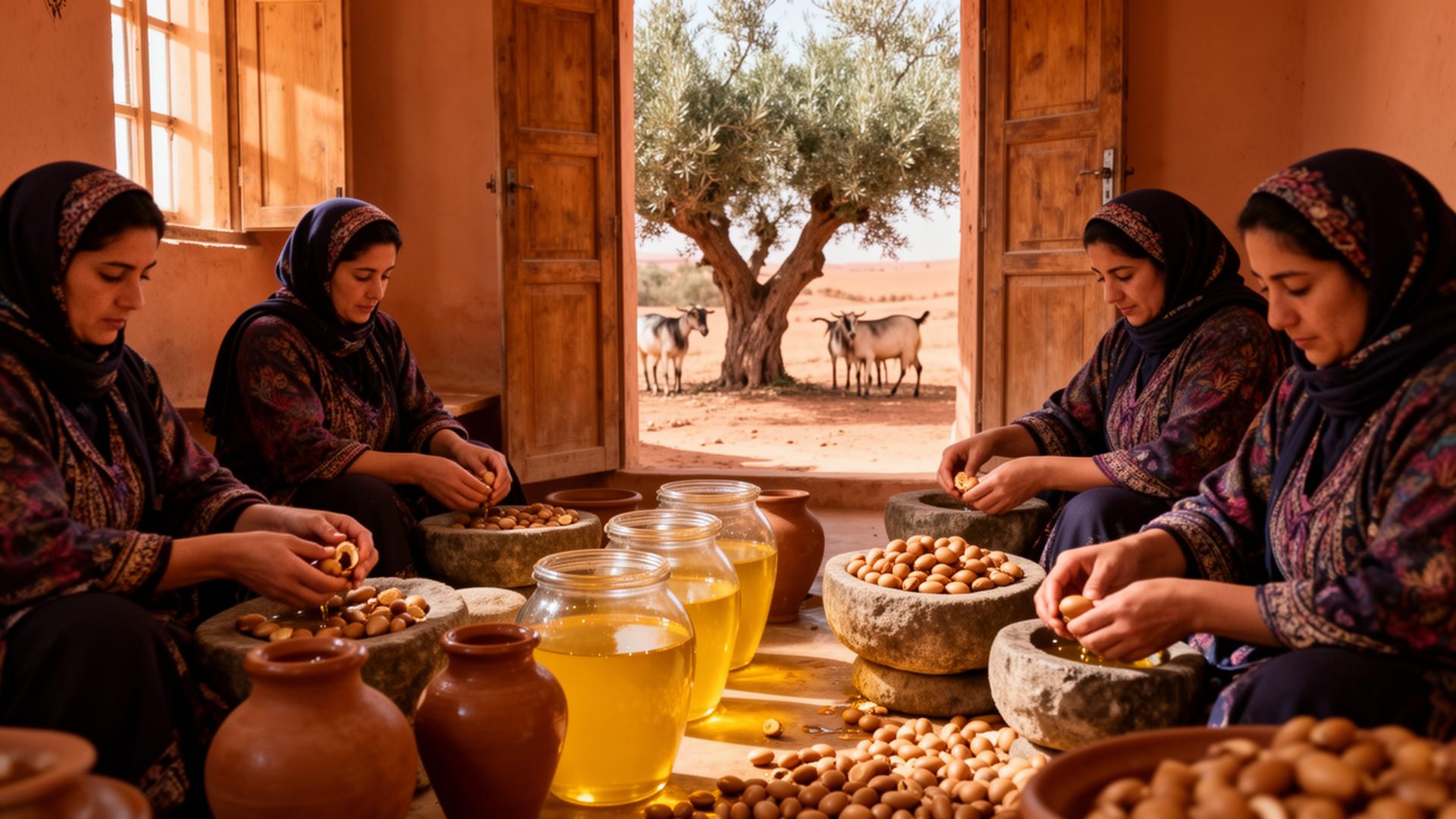
    Argan oil from the Souss-Massa region of Morocco was for years a low-margin export commodity, priced by the litre and shipped abroad for cosmetics and food brands. Berber women's cooperatives, organised since the late 1990s and scaling through the 2000s under fair-trade certification, reversed the value flow by opening production to travellers. Visitors are guided through nut cracking, cold pressing, and hand extraction, then buy oil on site at prices several times the bulk export rate. The cooperatives sit inside the UNESCO Argan Biosphere Reserve, which lends ecological framing and protects the trees that anchor the entire chain. Membership in cooperatives such as Tighanimine, Targanine, and the Marjana union now numbers in the thousands of women, with documented gains in literacy, healthcare access, and household income. The model has since spread to dozens of cooperatives across southern Morocco and is referenced internationally as a template for women-led agritourism.

    ◈ Framework

    Innovation Impact Canvas

    An 8-dimension case study framework tracing the full lifecycle of innovation, from the problem that created the need, to the mechanism of change, to the lessons available for replication.

    01
    The Gap
    What specific friction, inequity, or missed opportunity in travel/tourism prompted this?
    Argan oil left the Souss-Massa region as a bulk commodity at export prices set by buyers in Europe and the Gulf, leaving the women who did the cracking and pressing with a fraction of the retail value paid by end consumers abroad.
    02
    The Trigger
    What change in technology, behaviour, regulation, or competition made this innovation possible or necessary NOW?
    Fair-trade certification arrived in Moroccan argan in the 2000s alongside a UNESCO Biosphere designation for the argan forest, and tourist flows through Agadir, Essaouira, and Marrakech grew large enough that cooperatives could capture buyers at the source rather than ship to them.
    03
    The Breakthrough
    What is the core innovation - what changed, and why is it fundamentally different from what existed before?
    Turn the production site into the point of sale. Visitors who watch the hand labour behind a bottle accept retail prices several times the bulk export rate, and the cooperative captures the full margin instead of the exporter.
    04
    How It Works
    What technology, process, business model, or service design architecture enables this?
    1 Women organise into cooperatives under fair-trade and biosphere-linked certification, pooling harvest, cracking, and cold-pressing work that was previously done in isolation at home. 2 Workshops along tourist routes between Agadir, Essaouira, and Marrakech are opened to visitors, who are walked through the cracking, pressing, and filtering steps in person. 3 Oil is bottled and sold on site under cooperative labels at retail prices, with tour operators and riads steering guests to certified cooperatives. 4 A defined share of revenue funds literacy classes, childcare, and basic health coverage for members, which is described to buyers as part of the visit.
    05
    The Impact
    What measurable, quantified outcomes has this produced?
    Member earnings rose to roughly 2,000 to 4,000 dirhams per month, several times the prevailing rural agricultural wage. The model now spans more than 150 cooperatives and tens of thousands of women across southern Morocco. On-site retail prices run five to ten times higher than wholesale export prices for the same oil. Member welfare programmes have funded literacy classes and healthcare access for thousands of rural women.
    06
    Friction & Risk
    What challenged implementation? What could go wrong or limit adoption?
    Global cosmetic demand has pulled argan prices and middlemen back into the chain, and recent reporting shows cooperatives losing margin as brands buy direct from larger consolidators. Quality varies between cooperatives, counterfeit roadside vendors confuse buyers, and tourist concentration along a few routes leaves remote producers behind. The model also depends on continued visitor flow, which is exposed to regional travel shocks.
    07
    The Ripple Effect
    What does this unlock, influence, or make possible beyond its immediate context?
    The format has been copied by Moroccan cooperatives producing saffron, rose water, cactus oil, and honey, and is cited internationally as a template for women-led agritourism. It shifted the conversation in development circles from training women as suppliers to positioning them as retailers of their own labour.
    08
    The Playbook
    What would another organization need to replicate or adapt this?
    Find a labour-intensive craft product with a clear place story, organise producers under a certification that buyers already trust, place the workshop on a route visitors are taking anyway, and price at retail with the production visible. Ring-fence a share of margin for member welfare and make that share legible to the buyer.
    ◈ Replicability

    Replicability Score

    An AI-evaluated measure of how easily and relevantly this innovation can be replicated by other tourism & travel sectors.

    9
    / 100
    Hard to Replicate

    The mechanism is low-tech and structurally portable to any labour-intensive craft product with a recognisable place story and existing visitor flow, but premium pricing depends on a credible certification frame, protection from counterfeit roadside vendors, and continued tourism volume.

    Relevant for these sectors
    SustainabilityTour Operators & DMCsFood & BeverageDestination Marketing
    ◈ Replicate

    How organizations can replicate this

    Key principles and transferable insights for adapting this innovation to other contexts.

    The model travels wherever a labour-intensive craft product, a recognisable place story, and a visitor flow already coexist. Anchor the visit in a certification or protected-area frame, run the workshop as the storefront, and channel a defined share of margin into member welfare so the premium is legible to the buyer.

    ◈ Score

    Innovation Score

    Editorial assessment across 8 weighted dimensions. Scores represent our judgment based on publicly available evidence, industry coverage, and documented outcomes. Scores are revised as new evidence emerges.

    Problem–Solution Fit (20%)9
    Commercial Impact (18%)7.8
    Experience Transformation (16%)8.6
    Scalability (14%)8.2
    Sustainability Alignment (12%)9.2
    Technology Sophistication (10%)4.5
    Industry Influence (6%)8.4
    Evidence Quality (4%)7.6
    ◈ Innovation Score
    Problem–Solution Fit (20%)9
    Commercial Impact (18%)7.8
    Experience Transformation (16%)8.6
    Scalability (14%)8.2
    Sustainability Alignment (12%)9.2
    Technology Sophistication (10%)4.5
    Industry Influence (6%)8.4
    Evidence Quality (4%)7.6
    Weighted Overall Score 8/100

    Full Analysis is available to Pro members. Upgrade to Pro.

    ◈ Details
    community tourismcooperativeswomen-ledagritourismfair tradeUNESCO Biosphere

    Share this innovation

    Innovation.
    Travel
    Part of the Travel Intelligence Network

    © 2026 Innovation.Travel